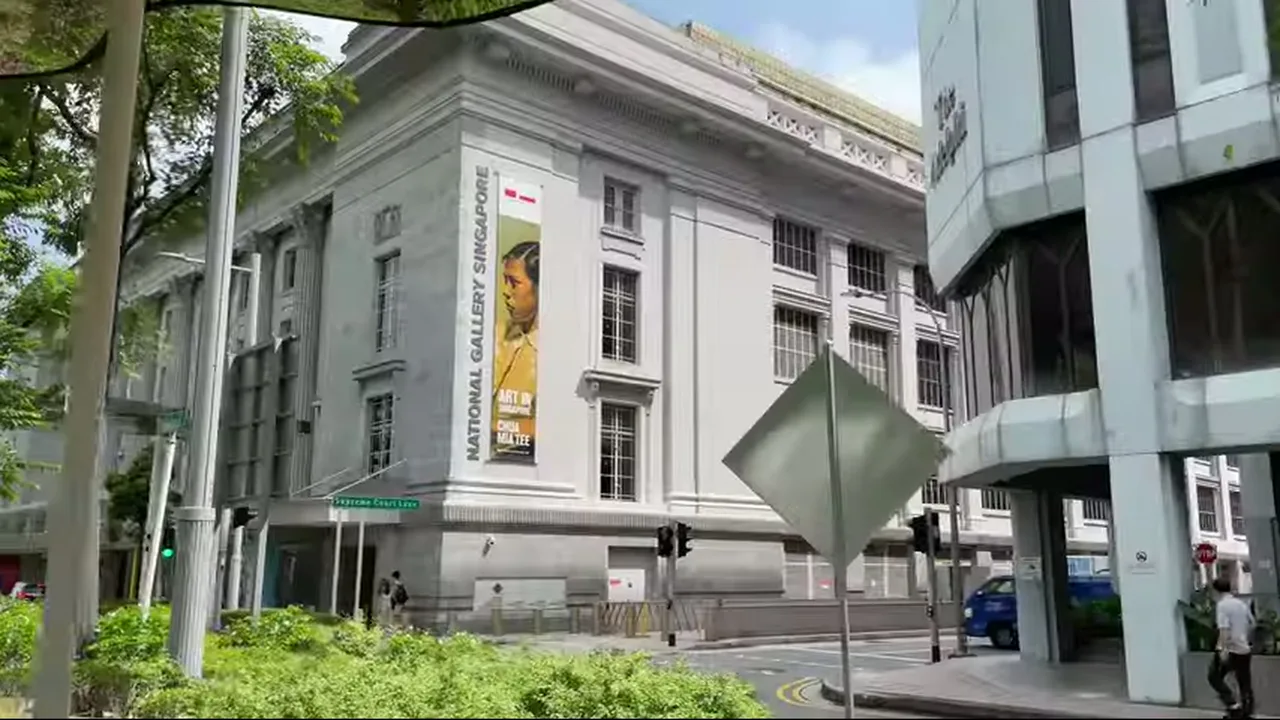
History enthusiasts and first-time visitors should prioritize this museum for its comprehensive Singapore History Gallery, which uses immersive storytelling to explain the island's rapid evolution. It serves as the definitive starting point for understanding the cultural and political context of the city-state beyond its modern skyline.
National Museum Of Singapore

Why visit
Those with limited time who prefer high-energy attractions or outdoor sights may find the deep historical focus too academic. If you have already visited the Asian Civilisations Museum and are short on time, this may feel redundant unless you specifically want to see the digital 'Story of the Forest' installation.
Visit on a weekday morning for the quietest experience.
What to know beforehand
A masterfully curated journey through Singapore’s transformation, blending 19th-century neoclassical architecture with immersive digital storytelling.
The History Gallery on the first floor is a deep, chronological dive that requires focus; it is best suited for those who appreciate a narrative-driven museum experience rather than a quick photo op.
The 'Story of the Forest' digital installation provides a high-tech contrast in the Glass Rotunda, though it may feel familiar if you have visited other immersive art spaces recently.
Practical Note: The galleries are kept at a very low temperature for preservation, so a light sweater is necessary for a two-hour visit. This museum is a must-visit for history buffs, while those seeking purely visual entertainment might find the extensive text and archival footage a bit demanding.
Arrive at 10:00 AM on a Tuesday or Wednesday to navigate the galleries before the afternoon crowds and school groups.
Standard entry for international visitors is SGD 15 for permanent galleries. An all-access pass for special exhibitions is SGD 26. Singapore Citizens and Permanent Residents enter for free.
Spend 2 to 3 hours to cover both the main historical narrative and the thematic Life in Singapore galleries. Located at 93 Stamford Road, the building is a short walk from Bras Basah MRT station on the Circle Line.

🎫 Tickets, tours & discounts
Permanent Galleries (Standard Admission)
- Singapore History Gallery access
- Level 2 Life in Singapore galleries
- Story of the Forest digital installation
- Historical building architectural tour
All-Access Pass (Permanent + Special Exhibitions)
- All permanent gallery exhibitions
- Current seasonal special exhibition entry
- Multimedia interactive gallery displays
- Digital glass rotunda access
Singapore History & Art Combo (National Museum + National Gallery)
- National Museum permanent galleries
- National Gallery Singapore general admission
- City Hall wing art collections
- Supreme Court wing historical galleries
For most international visitors, the standard Permanent Galleries ticket is the most practical choice. It provides full access to the Singapore History Gallery and the four 'Life in Singapore' galleries, which cover the essential narrative of the city-state.
You should only opt for the All-Access Pass if there is a specific special exhibition running that aligns with your interests, as the permanent collection alone takes about two to three hours to explore thoroughly.
- Permanent Galleries: The best value for understanding Singapore’s 700-year history.
- All-Access Pass: Includes seasonal, high-tech, or art-focused temporary exhibitions.
A common mistake is purchasing an All-Access Pass late in the day. The museum closes at 7:00 PM, and trying to cover both the permanent history galleries and a major special exhibition in under two hours often leads to a rushed and unsatisfying experience.
The museum opens at 10:00 AM, and arriving at this time is the best way to avoid the school groups and tour buses that typically arrive by midday. Weekdays are significantly quieter than weekends, when local families frequent the interactive zones.
For photographers, the mid-morning light hitting the glass rotunda and the neo-classical facade provides the best natural illumination.
Solo travelers and history enthusiasts should aim for a Tuesday or Wednesday morning for the quietest atmosphere. Families may find the weekend buzz more engaging, as there are often more staff-led activities for children during those times.
Singapore Citizens and Permanent Residents enjoy free admission to the permanent galleries; if you hold this status, simply present your NRIC or Singpass at the counter. For tourists, the museum is a featured attraction on the Go City Singapore Pass and the Klook Singapore Pass.
These are excellent options if you plan to visit the nearby National Gallery Singapore or the Asian Civilisations Museum within the same few days.
Discounted rates are strictly enforced for seniors (60 and above) and students, so carry a physical or digital ID. Children aged 6 and under enter for free regardless of nationality.
Taking a guided tour is highly recommended here because the narrative of Singapore's transition from a fishing village to a global hub is complex. The museum offers free volunteer-led tours, usually departing from the Rotunda. These guides provide anecdotal context that you won't find on the placards, making the history feel much more personal.
If you prefer a self-paced visit, you can skip the tour without missing out on the facts. The museum is exceptionally well-signposted with English descriptions and immersive multimedia displays, making it one of the most accessible museums in Asia for solo exploration.

Crowd indicator
Weekdays and early mornings offer the quietest experience, while weekends and school holidays draw large crowds of local families.
Mini-calculator based on crowd levels by day and time.
This day is usually calmer than average. This slot has a higher chance of a comfortable visit: Rushed before closing. Weather is currently not ideal: mostly clear 🌤️.
Nearest days
How to find the entrance
93 Stamford Road, Singapore 178897
Bras Basah (CC2) or Bencoolen (DT21)
Civic District
The nation's oldest museum, featuring a stunning blend of 19th-century colonial architecture and a modern glass rotunda, dedicated to the history and culture of Singapore.
The National Museum of Singapore is easily identified by its massive white colonial facade and the modern glass rotunda attached to its side. If you are arriving via the MRT, the shortest walk is from Bras Basah station using Exit B.
Simply walk past the Singapore Management University buildings toward Stamford Road, and the museum will be directly in front of you.
The main entrance leads you into a bright, air-conditioned atrium. This is the central hub where you will find the ticketing counters and the information desk.
If you already hold an electronic ticket, you can bypass the main ticket line and proceed directly to the gallery entrances, though you must still pass through a quick security bag check at the front doors.
Navigating the building can be slightly disorienting because of the split between the historic wing and the modern extension. Most visitors start with the Singapore History Gallery on Level 1.
To reach the upper-level galleries or the Glass Rotunda, use the elevators located behind the grand central staircase to avoid unnecessary walking through the administrative corridors.
- Security bag checks at the main entrance.
- Potential wait times for the Story of the Forest installation in the Glass Rotunda.
- Walking distance between the MRT exits and the front gates.
Practical limits & what to bring
What to consider before your visit
The museum is housed in a large heritage building where the air conditioning is kept at a very low temperature to preserve the artifacts. It is highly recommended to bring a light jacket or sweater to stay comfortable while exploring the galleries.
Expect to spend at least two to three hours on-site to cover the main historical narratives and digital installations. While the museum is spacious, the Singapore History Gallery on Level 1 can become crowded during weekend afternoons and school holiday periods.
Entry is managed through timed slots, so booking your tickets online in advance is the most reliable way to ensure immediate access upon arrival. The entire facility is wheelchair and stroller friendly, with elevators providing easy access to all four levels and clear ramps connecting the historic and modern wings.
What is allowed and what is forbidden
- Food and drinks, including bottled water, are not permitted inside the galleries to protect the collection.
- Flash photography, tripods, and selfie sticks are strictly prohibited.
- Professional video recording equipment is not allowed without prior authorization.
- Smoking and vaping are forbidden throughout the museum premises.
- Non-flash photography for personal, non-commercial use is permitted in most permanent galleries.
- Small personal bags and handbags are allowed inside.
Storage and belongings
Free lockers are available on Level 1 near the Visitor Service counter for storing small bags, umbrellas, and personal items. These lockers operate on a first-come, first-served basis.
If you are arriving with large suitcases or bulky backpacks, please note that the museum has limited space for oversized luggage and may not be able to accommodate items larger than standard cabin baggage.
Strollers are permitted within the galleries, though you may be asked to leave them in a designated parking area before entering specific immersive or narrow installations.
Location and what's nearby
What kind of neighborhood
- The Civic District serves as Singapore's historical and cultural core, where grand colonial-era architecture meets lush tropical greenery.
- It offers a sophisticated and academic atmosphere, making it the perfect location for museum-hopping and heritage walks.
- The area is characterized by wide boulevards and significant monuments, attracting those who prefer culture over high-energy shopping.
Nearby on foot (up to 15 minutes)
- Fort Canning Park — historical hilltop with spice gardens and ancient ruins · 2 min walk
- Peranakan Museum — dedicated to the unique culture of the Straits Settlements · 6 min walk
- CHIJMES — former convent turned into a vibrant dining and lifestyle complex · 8 min walk
- National Gallery Singapore — world-class art collection housed in the former Supreme Court · 12 min walk
- St. Andrew's Cathedral — the city's oldest Anglican church with striking white spires · 10 min walk
- Armenian Apostolic Church — peaceful 19th-century church surrounded by a memorial garden · 7 min walk
Within 15–30 minutes by transport
- Gardens by the Bay — futuristic nature park with giant supertrees and conservatories · 15 min by taxi
- Marina Bay Sands — iconic integrated resort with a rooftop infinity pool · 15 min by metro
- Chinatown — vibrant district with traditional markets and the Buddha Tooth Relic Temple · 12 min by metro
- Orchard Road — the main shopping belt of Singapore with endless malls · 10 min by taxi
Where to eat nearby
- Flutes — modern European dining in a historic museum wing · above average · reservation recommended · 0 min walk
- True Blue Cuisine — authentic Peranakan heritage dishes and ornate decor · above average · reservation recommended · 6 min walk
- YY Kafei Dian — traditional Hainanese coffee and fluffy kaya toast · budget · no reservation needed · 10 min walk
- New Ubin Seafood CHIJMES — local zi char favorites in a colonial setting · mid-range · reservation recommended · 8 min walk
Ready-made itinerary for the day
Start the morning at Fort Canning Park to explore the historical gardens before heading to the National Museum of Singapore for a journey through the country's past.
For lunch, walk to YY Kafei Dian for a traditional Hainanese meal, then spend the afternoon admiring the vast art collections at the National Gallery Singapore. Finish the evening at CHIJMES, where you can enjoy dinner and drinks in a beautifully restored 19th-century courtyard.
ReferenceFacts
Read more
- Opening: 1887, establishing it as the oldest museum in Singapore and a primary landmark of the Civic District.
- Total floor area: 18,400 square meters, accommodating expansive permanent galleries and a modern glass-and-steel extension.
- Redevelopment cost: SGD 132.6 million for the massive 2003-2006 restoration that doubled the museum's original size.
- Glass Rotunda height: 15 meters, featuring a 360-degree digital projection space that serves as a bridge between the old and new wings.
- Artifact count: Over 1,700 items are showcased in the Singapore History Gallery, representing seven centuries of the island's evolution.
- Historical depth: 700 years of documented history are covered, tracing the journey from a 14th-century trading post to a modern nation-state.
- Myth: The museum has always been a dedicated space for historical artifacts and art. Fact: It originally functioned as the Raffles Library and Museum, housing the national library collection until 1960.
- Myth: The entire building is a preserved Victorian-era colonial structure. Fact: The rear portion is a contemporary architectural addition completed in 2006, featuring a massive glass rotunda and steel supports.
- Myth: The exhibits only focus on the period after the British arrived in 1819. Fact: The Singapore History Gallery begins in the 14th century, documenting the pre-colonial Kingdom of Singapura and its maritime trade.
- The Singapore Stone: A fragment of an ancient sandstone slab with an undeciphered script from the 10th to 14th century is displayed as a National Treasure.
- Hidden spiral staircases: Original 19th-century cast-iron spiral stairs are still located in the historic wing, once used by librarians to access high book stacks.
- Stained glass protection: The 120 colored glass panels in the rotunda dome were removed and hidden during World War II to prevent damage from aerial bombings.
- The William Farquhar Collection: The museum holds 477 natural history drawings from the early 1800s, which are brought to life through a massive digital installation.
- The Forbidden Hill connection: The museum is built at the foot of Fort Canning Hill, which was once the exclusive residence of Malay kings and is considered sacred ground.
BackgroundHistory
Read more
The National Museum of Singapore traces its origins to 1849, when it began as a library and museum section within the Singapore Institution. In 1887, it moved to its permanent home on Stamford Road, housed in a grand Neo-Palladian building designed by colonial engineer Henry McCallum.
Featuring a prominent dome and classical facade, the institution was initially established to document the natural history and zoological specimens of the Malayan region.
From Natural History to National Identity
A major turning point occurred after Singapore gained independence in 1965. The museum transitioned from a regional scientific repository to a dedicated custodian of the new nation's heritage.
The zoological collections were eventually transferred to the national university, allowing the museum to focus entirely on the social history, struggles, and rapid development of Singapore and its diverse communities.
Today, the museum serves as an essential starting point for understanding the island's transformation. The historic nineteenth-century rotunda is now seamlessly integrated with a modern glass-and-metal wing.
Inside, the galleries use immersive multimedia installations and personal narratives to trace Singapore's journey from a colonial trading post to a global metropolis.
♿ Accessibility & families
The National Museum of Singapore is fully accessible for wheelchair users and families with strollers, featuring modern lifts, wide corridors, and step-free access to all major galleries.
The museum is equipped with ramps and elevators serving all levels from the Basement to Level 3. The main entrance on Stamford Road provides level access to the building. Manual wheelchairs are available for loan at the Visitor Service counter on Level 1 on a first-come, first-served basis.
Strollers are permitted inside all exhibition galleries. The 'Story of the Forest' installation in the Glass Rotunda features a long, gentle spiral ramp that is easy to navigate with wheels. For those who prefer not to use a stroller inside, there is no dedicated storage, so keeping it with you is the standard practice.
Nursing rooms equipped with diaper-changing stations and private areas for breastfeeding are located on Level 1 and Level 2. The museum is spacious, but the Singapore History Gallery involves a significant amount of walking; plan for breaks in the various seating areas provided throughout the halls.
Children aged 6 and below enjoy free admission to all galleries.
Visitors under the age of 13 must be accompanied by an adult at all times while inside the museum.
For non-residents, adult tickets are 15 SGD, while seniors (60+) and students with valid ID pay 10 SGD.
🏢 On-site amenities
On-Site Facilities
The museum features several dining options catering to different needs. Food For Thought on Level 1 offers a casual environment with a mix of local and Western comfort food, while Flutes provides a premium fine-dining experience in a more formal setting.
For souvenirs, the Museum Label shop near the main entrance sells high-quality Singapore-themed books, designer stationery, and unique lifestyle products.
Restrooms are located on every floor, including the basement level, and are free for all visitors. Families can find dedicated nursing rooms on Level 1 and Level 2, which include changing tables and private areas for feeding.
Free public Wi-Fi is accessible throughout the galleries and common areas. Water fountains are positioned near most restroom clusters for bottle refills. While you may carry your own water bottle into the building, consumption of food and drinks is strictly prohibited inside the exhibition galleries.